



Birth registration in Benin: ANIP’s one-stop shop boosts the rate from 21.95% to 76.56% in six months

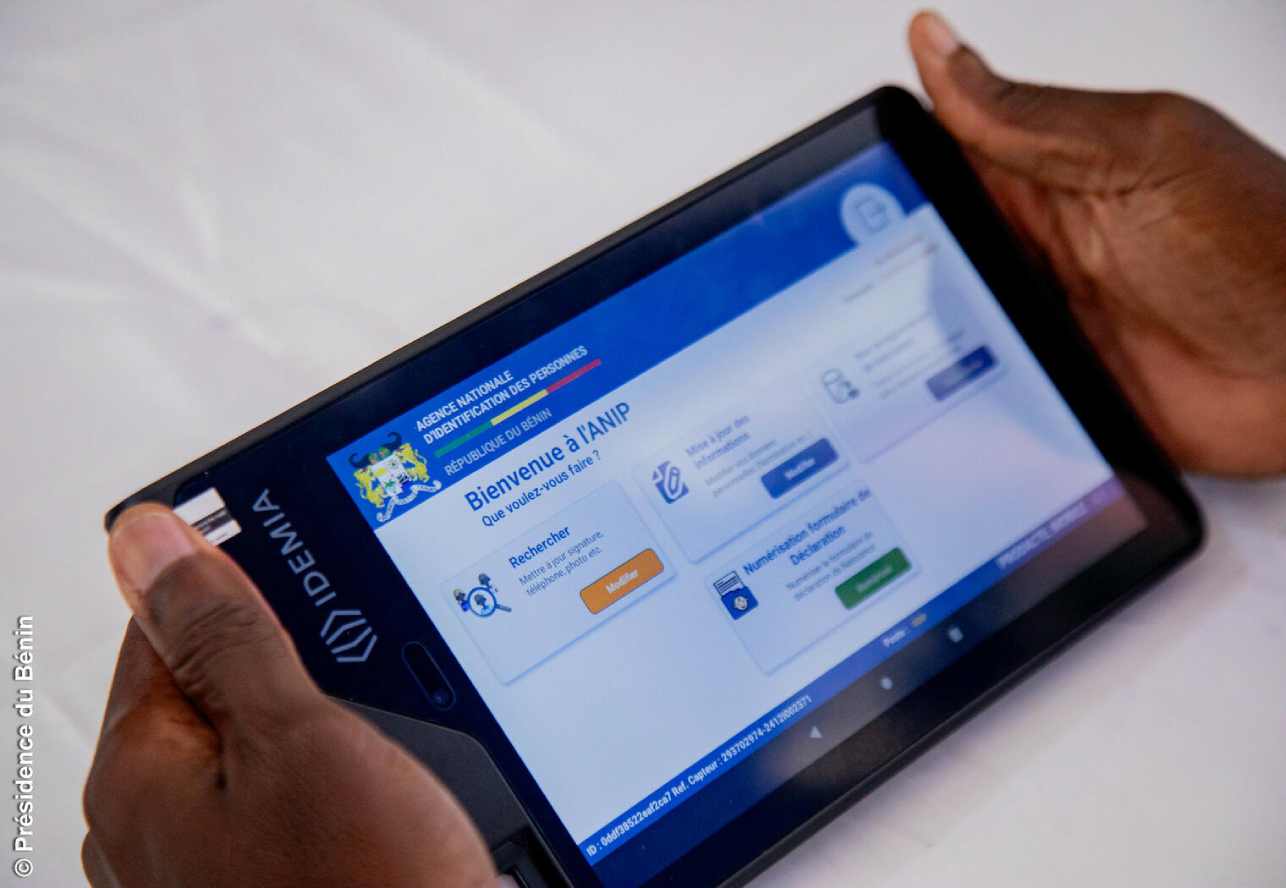
The reform of the one-stop shop for birth registration and declaration, launched on August 20, 2025, in ten pilot health facilities by the National Agency for the Identification of Persons (ANIP), has profoundly transformed civil registration indicators. In six months, the registration rate increased from 21.95% to 76.56%, according to the report presented on February 24, 2026, by the National Agency for the Identification of Persons (ANIP), in collaboration with the Ministry of Health and with support from the WURI project.
Join the TRIOMPHE MAG community on WhatsApp now and stay informed in real time of all the latest news.
Click here to join our channel:TRIOMPHE MAG WhatsApp channel https://whatsapp.com/channel/0029VaCcWQz59PwKMBfy9k0f
The traditional procedure involved three steps: birth, declaration at a health facility, and then travel to an ANIP center for registration.one-stop shopintroduced in pilot phase theAugust 20, 2025, was designed forremove this breakand bring the service closer to the citizen.
This reform is part of a broader trend of digitizing public services undertaken by Benin for several years. This includes the modernization of the civil registration system and the establishment of the National Register of Natural Persons (RNPP).ANIP has gradually laid the foundations for an interconnected digital administration.
The one-stop shop is therefore the logical outcome of this digital transformation. It not only allows for the declaration and registration of births directly in healthcare facilities, but also paves the way for a now paperless and online processing system.
The report presentedduring the workshop on the evaluation of the pilot phase of the Single Window for the Declaration and Registration of Births, from August 20, 2025 – February 20, 2026and whoseTRIUMPH MAGreceived a copy, indicates that in less than 48 hours, parents can receive the child’s Personal Identification Number (PIN) by SMS and, if necessary, carry out additional steps remotely, without having to travel.
Six months later, the results are unequivocal.The registration rate exceeds 76%demonstrating the measurable impact of this reform on the civil registration system.
The consolidated data from 2021 to 2024 show astructural breakdown at the national level :
| Year | Average number of registered births | Average number of registered births | Registration rate |
| 2021- 2024 | 2 336 795 | 885 173 | 37,9 % |
| 2025 – August 2025 | 489 618 | 107 451 | 21,95 % |
Indeed, by 2025, the figures had reached a critical threshold. Of 489,618 declared births, only 107,451 were registered, representing a rate of21,95 %In other words, nearly eight out of ten children remain legally invisible. This anomaly has been precisely diagnosed using data.
An analysis of the data that reveals a structural break
The longitudinal analysis of data between 2021 and 2025 highlights a strong trend. According to the report released by ANIP in February 2026, on2 336 795registered births, only885 173were recorded, representing an average rate of37,9 %But this average masks a progressive deterioration of the system.
By cross-referencing the declaration and registration indicators, a clear break appears in the processing chain. The existing model imposed a four-step sequence: birth, declaration, transfer to an ANIP center, and then registration. It was this transfer, identified as the critical variable, that constituted the main obstacle.
“The problem wasn’t the parents’ will. It was organizational,” he acknowledged.the Director General of the National Agency for the Identification of Persons (ANIP), Aristide Adjinakou Gnahoui, during the review workshop in February 2026.
Transform the model rather than adjust it
Faced with this diagnosis, ANIP opted for a structural reform. On August 20, 2025, a pilot one-stop shop system was deployed in ten health facilities across the country.
The goal is to integrate birth declaration and registration in the same place, immediately after delivery. By eliminating the need for travel, the reform removes the main barrier identified by the data.
This paradigm shift is part of a strategy to optimize user journeys. For the CEO of ANIP, it’s no longer about adapting citizens to the system, but about adapting the system to citizens.
A spectacular increase in indicators
The results observed between August 20, 2025, and February 20, 2026, confirm the relevance of this approach. The birth registration rate in the pilot health facilities reached76,56 %.
This trend can be interpreted as a rapid increase in the registration rate over a six-month period. The rate has thus more than tripled in six months. This is a rare feat in the field of public policy, where changes are generally gradual.
Behind this spectacular progress in indicators, the parents benefiting from the scheme testify to a concrete change in their daily lives.“After giving birth, I was told that everything could be done right here at the hospital. I didn’t need to go back to an ANIP center like I did for my first child. In less than two days, I received my baby’s identification number by text message. That was a huge relief, especially considering the expenses and travel it saved me.”, confides Aïssatou S., a young mother encountered in one of the pilot health facilities in Cotonou.
Koffi A., a father of a family in Abomey-Calavi, also felt a sense of relief.“For our first child, it took us several weeks to get the birth certificate because of the paperwork. This time, with the one-stop shop, everything was done right from birth. It’s reassuring to know that our child officially exists in the system from their very first days.”He welcomed this. These testimonies illustrate the human impact of the reform, beyond the figures and statistical performance.
Data before the reform (2025)
- 489,618 births registered
- 107,451 births registered
- Rate: 21.95%
- Mandatory travel to ANIP
Data after the reform (pilot phase)
- Declaration integration + registration
- On-site treatment in health centers
- Rate: 76.56%
- Removal of displacement
A qualitative improvement in the data collected
Beyond the volume, the reform also improves data quality. More 96 %Registered children have a formalized acknowledgment of paternity.
This figure is crucial. It means that the majority of records are legally complete, which strengthens the reliability of the civil registry.
The National Register of Natural Persons (RNPP) directly benefits from this reform. Data from the pilot phase, available in the ANP report, indicates 30,160 number updates, 12,182 captured signatures, and 798 recorded portraits.
These figures reflect a significant expansion of the national database. The one-stop shop thus becomes a strategic entry point for digital birth registration in Benin.
World maps
One of the major contributions of this experience lies in the use of data as a management tool. The process follows a clear logic ofDiagnostic(identification of the break in the recording chain), ofExperimentation(implementation of a pilot program in 10 healthcare facilities), ofAssessment(measuring the impact on key indicators) andDecision(preparation for scaling up to the national level).
The operational data collected also confirms the efficiency gains, with an average reporting time of approximately 6 days, over 95% of registrations within the legal deadlines, and a significant reduction in rejections after correction. These indicators reflect an improvement in the system’s internal functioning, in addition to the impact on users.
Challenges identified through data
The data approach also helps identify the limitations of the system. Among the main difficulties noted are broken forms, duplicates in the databases, constraints related to mobile devices, and the lack of NPI (New Parent Information) among some parents. According to HerbertASSOGBA, Head of Policy, Partnerships and Multichannel Communication at theANIPCorrective measures have been implemented, including the printing of 500,000 forms and the regular monitoring of identifiers.
As recalled by the UNICEF representative in Benin, Julie Dubois, the one-stop shop modernizes the civil registry in Benin, guarantees the right to identity, access to social services (health, education) and protection from birth.“Without a legal identity, a child risks remaining invisible or excluded from public policies.”she declared. And better, she argues that the reform of the one-stop shop is thus in line with sustainable development goal 16.9, which aims to guarantee legal identity for all.
In six months, Benin has demonstrated that targeted, data-driven reform can produce rapid and measurable results. The increase from 21.95% to 76.56% is not a coincidence. It is the result of rigorous analysis, controlled experimentation, and effective implementation.

This WanaData article was supported byCode for Africaand theDigital Democracy Initiativeas part of the Digitalise Youth project, funded by theEuropean Partnership for Democracy (EPD).
Published on april 7, 2026 on TRIOMPHE MAG By Angèle Adanlé
